
A woman who tells it like it is, author and journalist Mary Lou Weisman

Putting a pen to words is an art, indeed a gift. Especially when those words have the power to change lives. Mary-Lou Weisman was born in 1937 in Fairfield, Connecticut to a mother who believed that writing thank you notes was a high art, and to a father who was convinced that one of the great joys in life was the pursuit of the right word. According to Mary-Lou, he was right and so was her mother. Mary-Lou became a writer at the age of seven, mainly due to her father’s influence.
Although initially she protested writing anything at all, she ultimately came to learn about gratitude and enjoyed searching for the right words to put on the notes. She couldn’t just write “Thank you, love Mary-Lou” when she received gifts. She felt compelled to both acknowledge it and graciously go on to tell the person who gave it to her exactly how she was going to use or enjoy their gift.
Later in life, unlike many of her classmates, she found she enjoyed writing term papers. She recalls two college literature teachers who complimented her on her writing ability. They were instrumental in helping Mary-Lou take herself seriously as a writer. She feels she owes them a lot. Mary-Lou obtained a solid liberal arts education, married, and secured a position as “clerk typist” in what was called, laughably, “a job in publishing.” The salary at that time during the 60s was a whopping $62.50 a week. She believed she was on her way to a career in journalism.
To this day, Mary-Lou laughs at her unlikely success. She believes she’s still a work in progress, despite having published numerous books, articles, and journalistic works. At first, she wasn’t sure she had the stamina for writing. Every single writing job involved an initial anxiety attack, but once she delved into the project, she found she loved the process. She describes the culmination of a writing project and the ultimate payoff as a thrilling sense of resolution and accomplishment. For Mary-Lou, writing has become not only her career, but a passion. When she first began, she had no other ambition than merely to write. But over the years, she has fallen in love with the process. Of course, Mary-Lou still gets disappointed if her writing project gets rejected, but she never regrets having written.
Mary Lou is inspired still by her parents. Even though they had no intention of making a writer out of her, inadvertently through her mother’s interest in basic writing skills and good manners, and her father’s love of words, they did so. Later on, the professionals in her life, helped her to do her best. Mary Lou’s first newspaper editor, Paul Good, remarked, “You don’t write bad for a housewife, kiddo.”
Some women might have taken offense to that, but for Mary Lou, it made her day. He was no feminist, but, hey, she was happy for the compliment. Further into her career, the editor of Woman’s Day, Ellen Levine, would invariably return her work back two or three times. Saying it could be better, without giving details, Levine never revealed what about the work she didn’t like. Ultimately, Mary Lou realized that there wasn’t anything specific Levine didn’t like. What she was trying to teach her was the life lesson that everything can always be better.
Despite working during the sixties, pre-women’s lib, Mary Lou remained naïve of any ways in which she’d ever been discriminated against as a woman. She believes this largely to be because she normally worked alone or among other women and did not compete with men directly in the marketplace. Although she’s never experienced a male writer, for instance, being chosen over her, Mary Lou constantly runs into a prejudice against women writers. She believes, that tendency is reflective of a lingering prejudice against women in general. If someone, male or female, asks her what she“does,” Mary Lou answers that she’s a writer. Often their next question is, “Have you been published?” She suspects that if she were a man, they wouldn’t ask her that question.
Mary Lou has written five books and scads of newspaper and magazine articles, all of which she considers to have been very rewarding. One of the books, MY MIDDLE-AGED BABY BOOK was a bestseller. Despite that commercial success, the book INTENSIVE CARE has given her the greatest sense of accomplishment. Not just because the book is about her beloved son Peter, who died at the young age of sixteen from Duchenne’s Muscular Dystrophy, although that was enough to make it her most rewarding experience. -and not because it received high praise from literary critics, although she is humbled and rewarded by that, too. It is because so many mothers and fathers of children with Duchenne’s Muscular Dystrophy and other life-threatening diseases have written to Mary Lou, including myself, to thank her for writing an honest, unsentimental book.
Mary Lou’s description of the painful saga is frank and unforgiving. From the very first chapter, she tells it like it is. Organizations like The Parent Project Muscular Dystrophy recommend that all families read this valuable life lesson. These families thank her for acknowledging how difficult their journey is, for inspiring them and for giving them the courage to go on.

Mary Lou is humbled that she was named a Belle of Steel. For her, writing is her passion. According the Mary Lou, “As anyone who has had a passion for anything – caring for the elderly, rearing children, playing the violin, fixing cars, teaching, — knows, passion is a strong driving force. If that passion is reinforced by talent, discipline, and a determination to persist in the face of rejection, you are likely to succeed.”

When originally interviewed by the author in June of 2015, she was asked what she hoped to be doing five years from now, again she was frank and honest. First and foremost, she’d like to be 81 and alive. Given that gift, she’d still like to be writing, teaching writing, enjoying her husband, grandchildren and friends, and traveling. But she supposes she won’t be riding her bike by then.
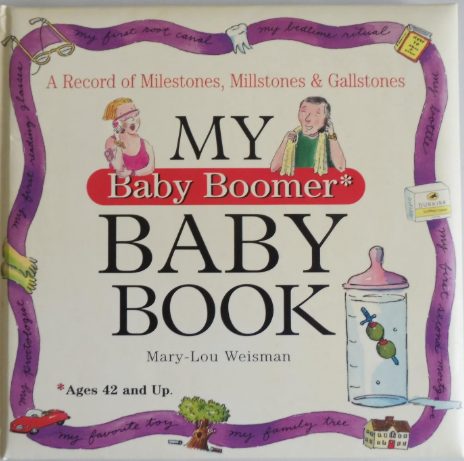
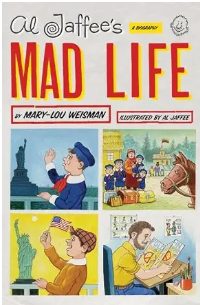
Mary-Lou is listed on IMDb as contributor to a film that was developed about her life and son, Peter, adapted from her book Intensive Care: A Family Love Story. The film is called A Time to Live and appeared as a made-for-TV drama. The 1985 film marks the dramatic television film debut of Liza Minnelli, who won a Golden Globe for her role as Mary-Lou Weisman. It was directed by Rick Wallace. Mary-Lou continued to write throughout her life. Her books mostly are about some of her own family’s experiences. She published My Baby Boomer Book writer with Paul Meisel in 2006; then she co-wrote a biography about a comic book writer, Al Jaffee’s Mad Life in 2010 with is cooperation.
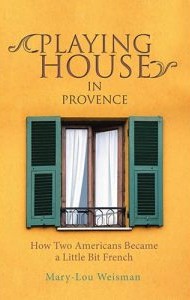
Taking many trips to Provence, France, with her husband Larry, starting in September of 2003. They fell in love with the place. Larry and Mary-Lou Instead fulfilled their dream of living in France via a series of extended, month-long rentals, which were immersive experiences living like the local French. They resided in the village of L’Isle-sur-la-Sorgue, part of Provence. This experience formed the basis of her writing a travel memoir. Out came another book, in 2017, Playing House in Provence: How Two Americans Became a Little Bit French.
She and her husband have immortalized their beloved son, Peter through charitable giving. The Weisman Award, a scholarship is given at Coley Middle School in Westport, CT. They also established the Fund For Peter’s Sake to assist students at Staple High School. Also, the Fairfield Country Community Trust and Peter’s Gate which is an Aspetuck Land Trust garden at Buckley Avenue North, also in Westport.
As of 2026, Mary-Lou has lived way beyond the age of 81. She is now 88 and continues to write. In addition, she teaches in-seat and online workshops for the Westport, CT library. Her most recent presentation was about writing, Advanced Essay Writing, in May of 2026. She has mastered upgraded computers and cell phones She loves taking long walks with her husband of 60 years, attorney Larry Weisman, now retired.
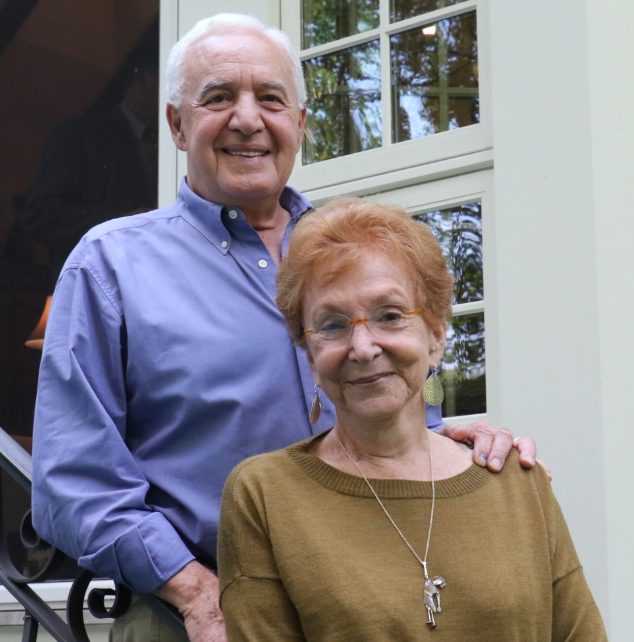
Larry and Mary-Lou Weisman at home in Westport, CT circa 2015. Photo courtesy of David Mallow for WestportNow online newspaper.
For her courage in writing the truth about an unpopular and devastating disease, and the book that has changed the lives of so many families, including mine, who face the battle of Duchenne’s, AgeView Press is proud to name Mary-Lou Weisman its eleventh Belle of Steel.
Military Connections: Although Mary-Lou has not written about it, a writer for WestportNow wrote about her husband’s connections, James Lomuscio. Larry Weisman worked worked in Mississippi and Louisiana during the Civil Rights Era. When he came home, he faced a burning cross set by a biker gang upon return to his family’s then Fairfield home. Mr. Weismand also defended a local Vietnam War, conscientious objector all the way to the Supreme Court and won the case. For decades, he has advocated and face fire in front of the Planning and Zoning Commission for Westport for many of the clients he represented, some of whom had military connections. This included opponents to some construction on Winslow Point during the 1970s.
Contact Mary Lou Weisman at www.marylouweisman.com